Case Study 04 · Electronics / Working Prototype

Acoustic Extinguisher
An autonomous fire extinguisher that runs on sound. It watches for fire on its own, warns the people around it, and puts the fire out with focused pulses of air, with no one needing to be there.
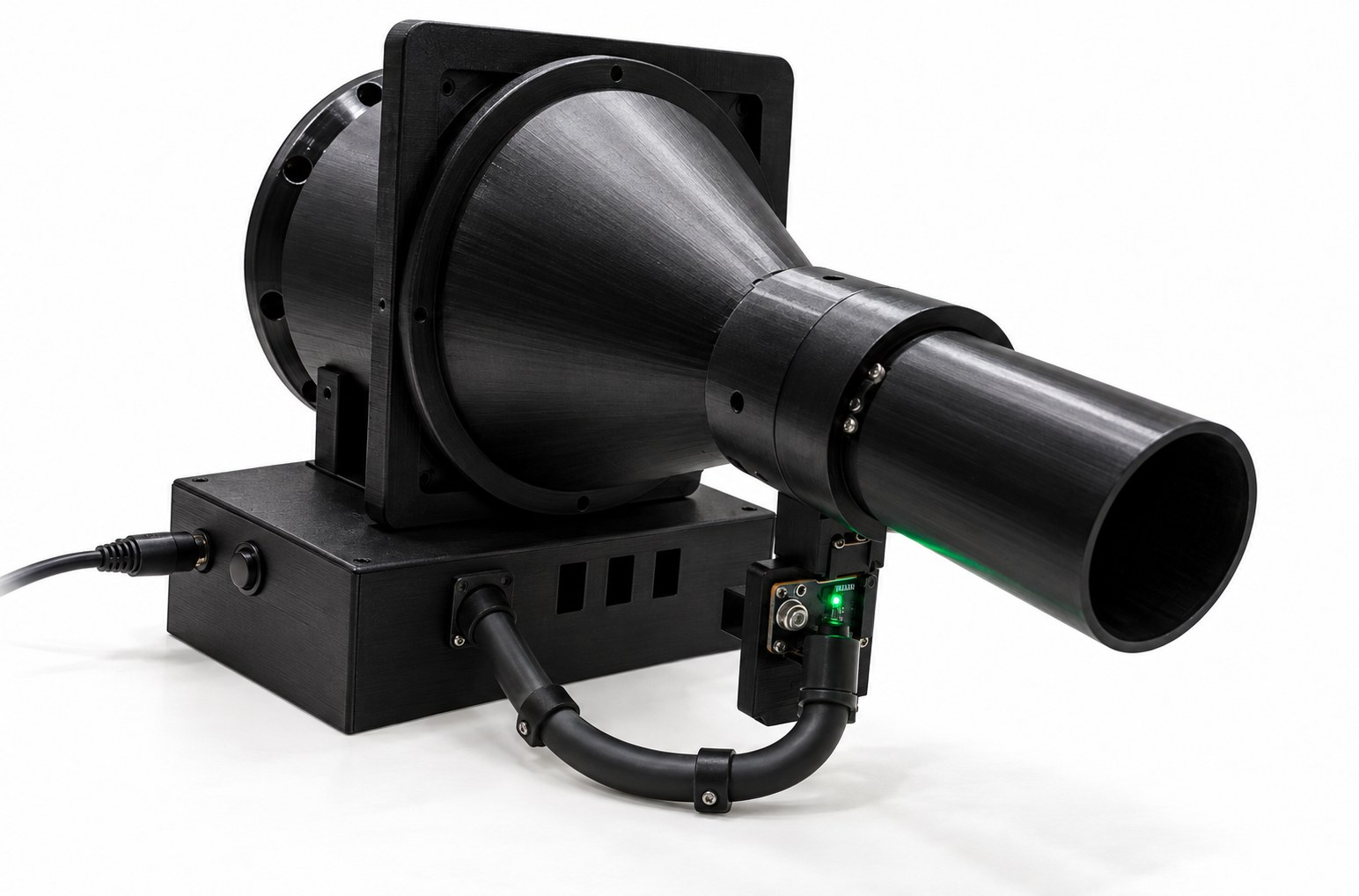
- Sensing
- IR flame sensor + MLX90614
- Control
- Arduino Uno
- Output
- 200 Hz via TPA3116 + 4″ speaker
- Build
- Fusion 360, 3D printed
The Problem
One needs a person, the other floods the room
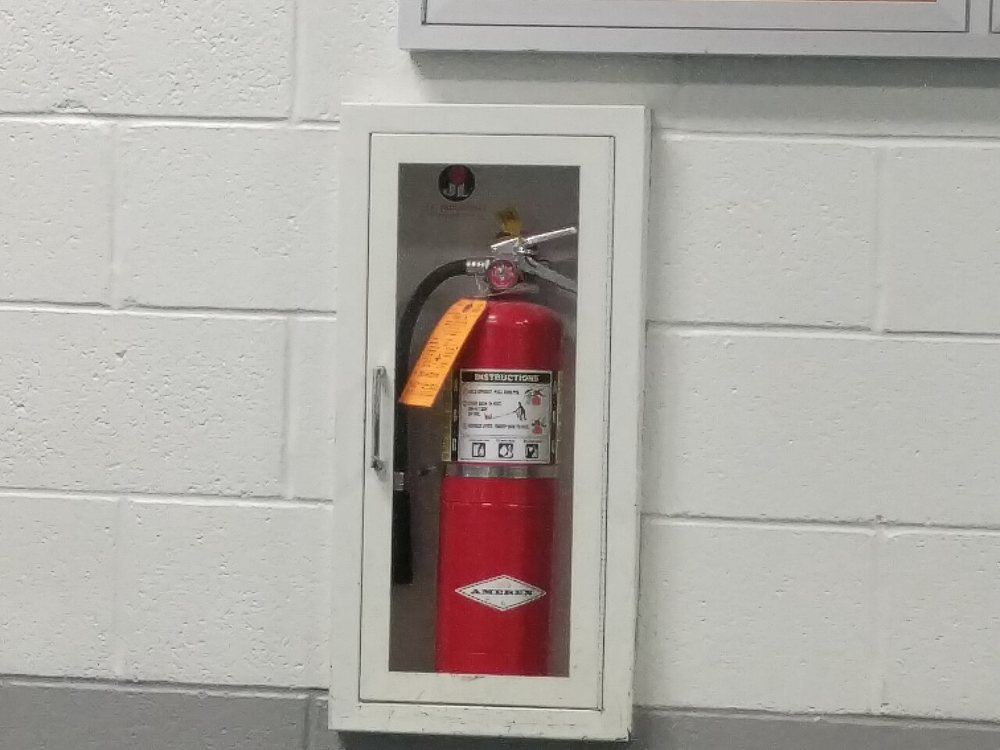
Fire is fought in two ways today. Handheld extinguishers are cheap and everywhere, but they only work once someone notices the fire, reaches it, pulls the pin and aims, standing close to it the whole time. A fire in an empty room or in the middle of the night has all the time it needs to grow.
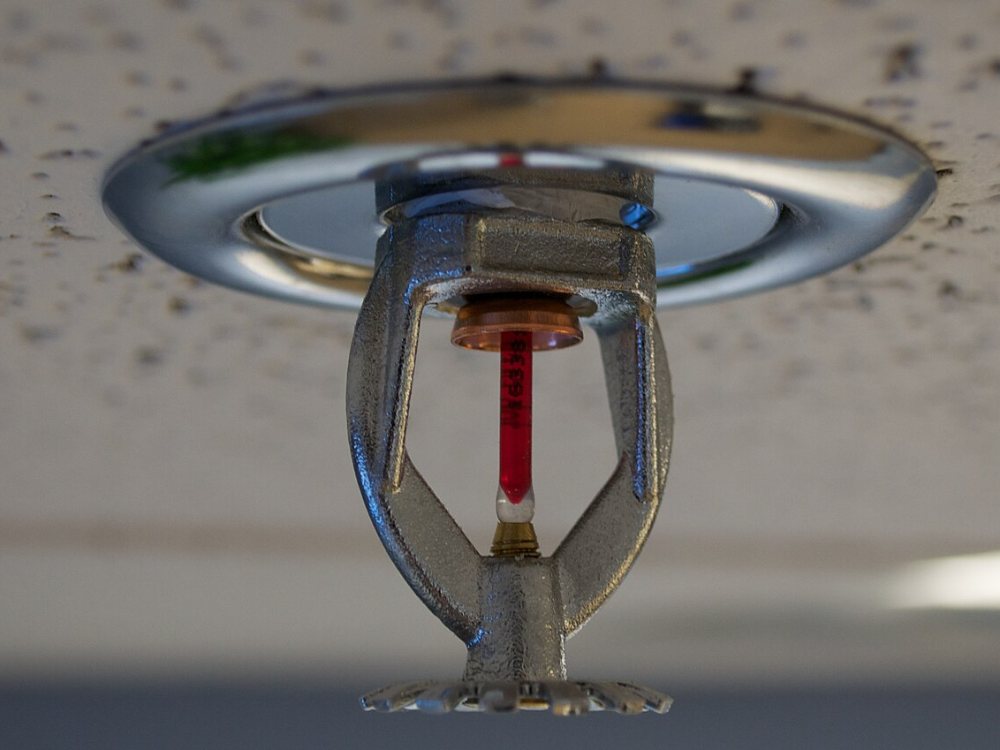
Sprinkler systems act on their own, but only once the heat is high enough to burst the bulb. Then they soak the whole room, along with the electronics, papers and equipment they were meant to protect, and nobody is warned until the water is already falling.
The gap
Protection that watches a space on its own, warns the people nearby and puts the fire out, without needing a person or flooding the room.
The Principle
It isn’t the noise. It’s the air.
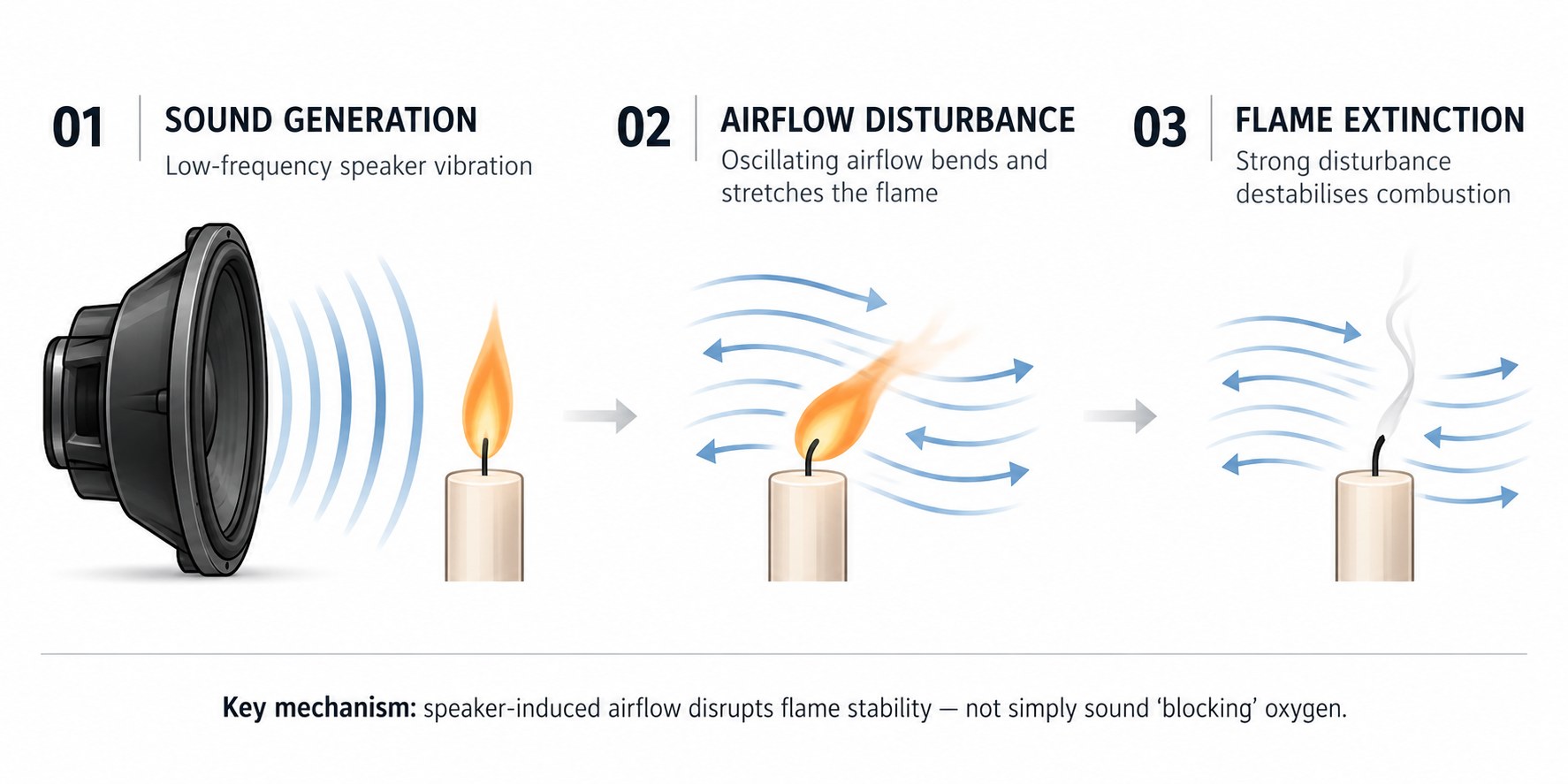
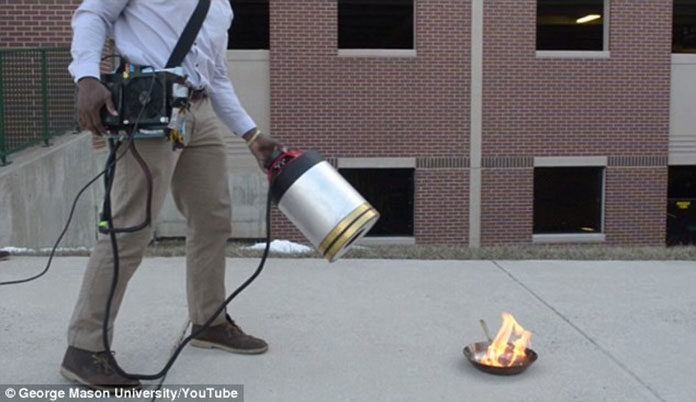
A speaker pushes air back and forth. Focused through a horn, that oscillating air bends and stretches the fire until combustion can no longer keep up.
Students at George Mason University showed this works in 2015, but someone still had to hold it and aim it. My aim was to make it autonomous: a product that finds the fire, raises the alarm and acts on its own.
Electronics
Detect, confirm, extinguish
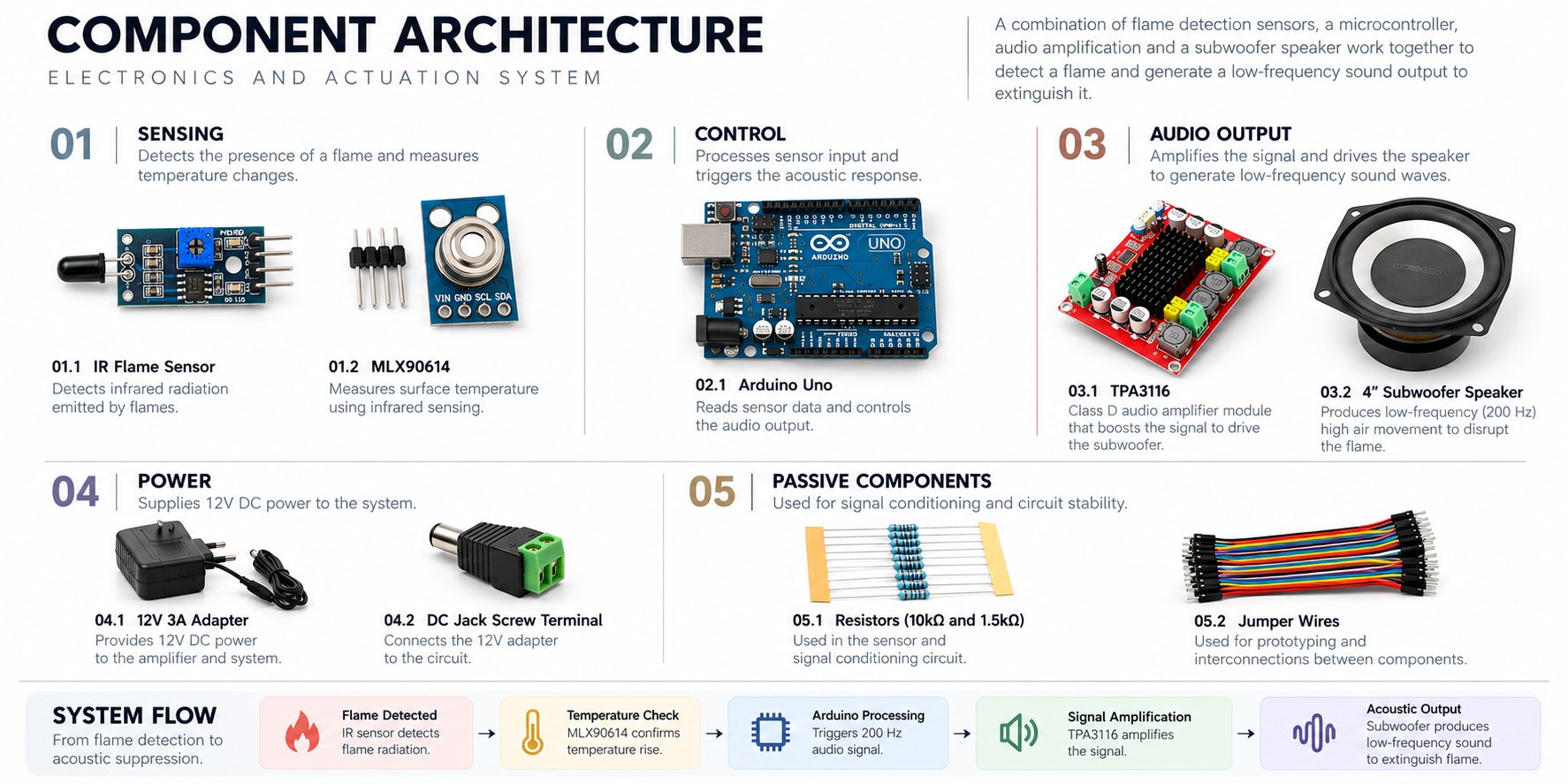
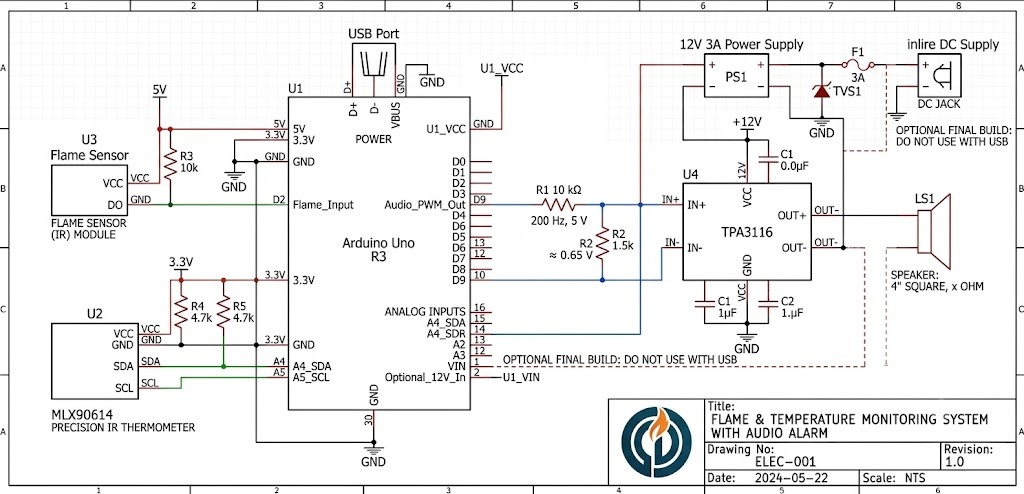
- 01DetectThe IR flame sensor sees the fire; the MLX90614 measures its heat from a distance.
- 02ConfirmThe Arduino only fires if both agree: fire seen and more than 6 °C above room temperature.
- 03Warn & driveA 200 Hz tone goes through the 12 V TPA3116 amplifier to the 4″ speaker. The deep hum that fights the fire is also an alarm anyone nearby can hear.
- 04Repeat3-second blasts, up to three times, stopping once the fire is out.
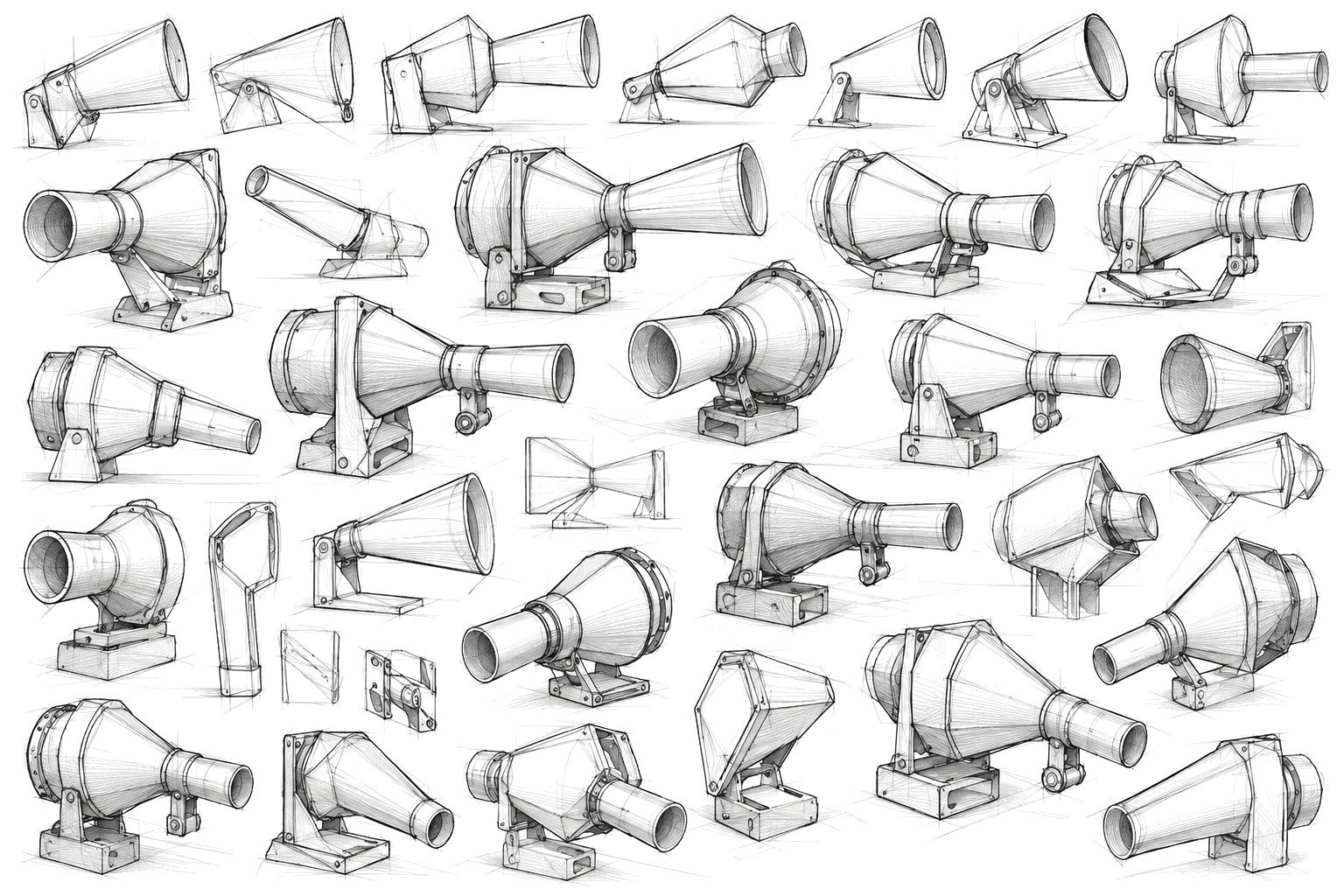
Form Exploration
Physics drew the first sketch
The physics set the core form: a sealed speaker housing, a horn that narrows the air pulses, and a nozzle to aim them. Sketching explored how those pieces sit on a base and where the sensors should look.
Identity
Fire is usually fought with force: water, foam and powder, and a person standing in harm’s way. This logo answers with something lighter. A bold, grounded letterform stands firm, a guardian that keeps watch, while three streaks of air stream away from it like pulses leaving the nozzle. Steady at its core, it acts the moment it is needed, so no one has to.
CAD
Eight parts, one printer
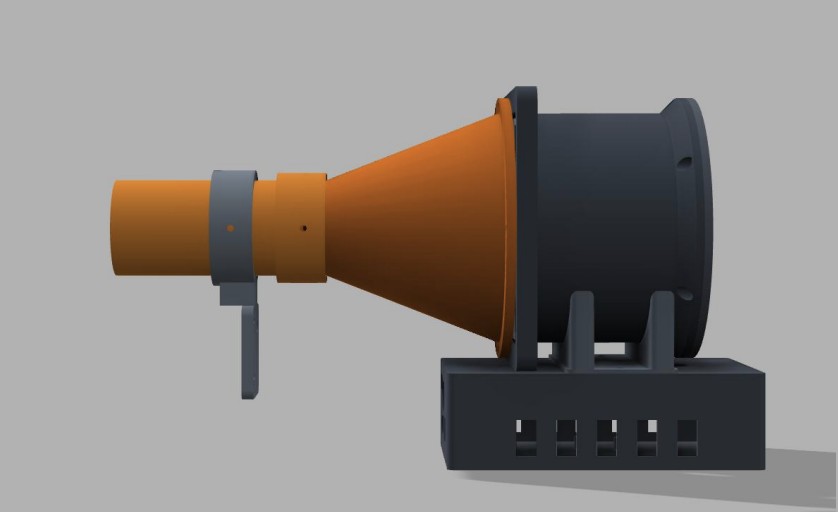
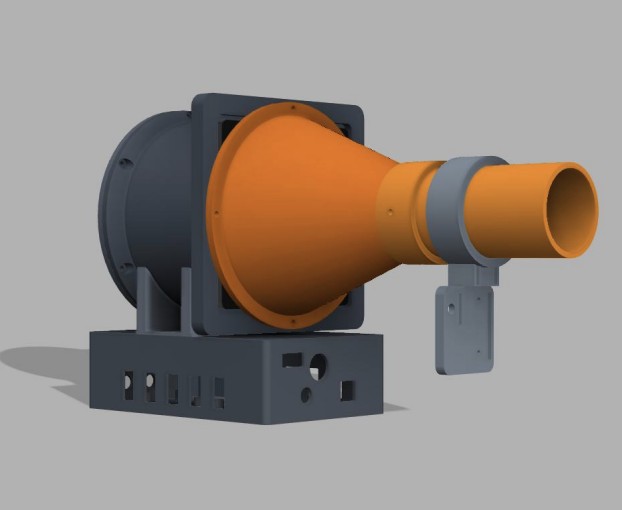
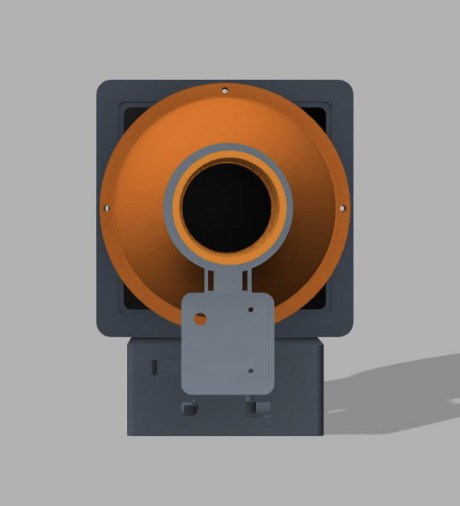
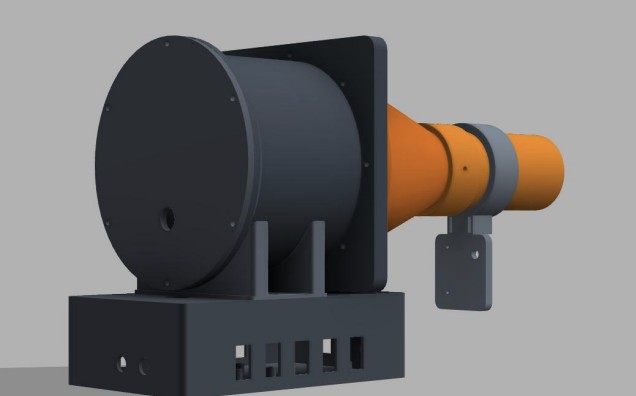
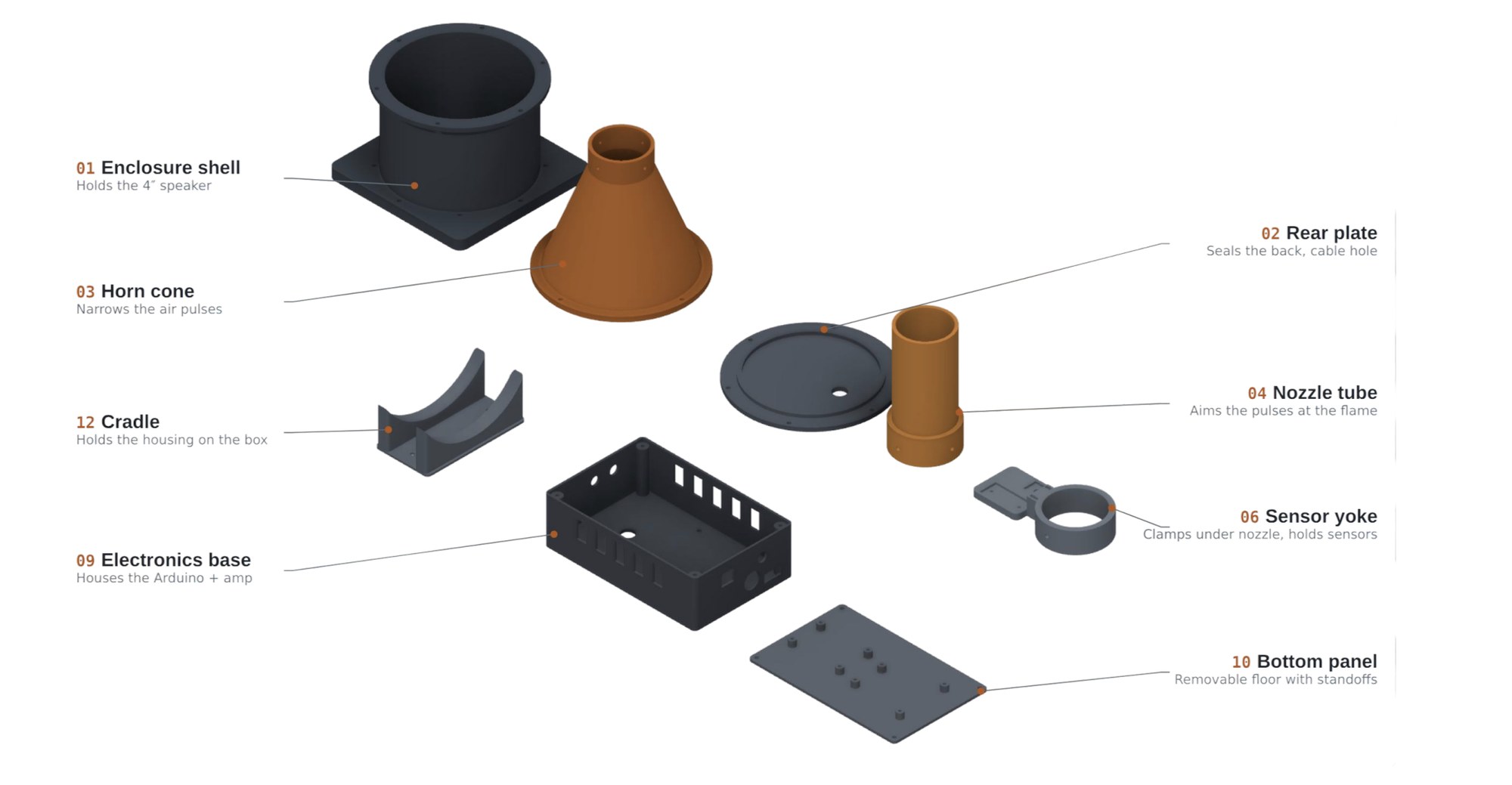
- 01Enclosure shellHolds the 4″ speaker.
- 02Rear plateSeals the back, with a cable hole.
- 03Horn coneNarrows the air pulses.
- 04Nozzle tubeAims the pulses at the fire.
- 06Sensor yokeClamps under the nozzle and holds the sensors.
- 09Electronics baseHouses the Arduino and amplifier.
- 10Bottom panelRemovable floor with standoffs.
- 12CradleHolds the housing on the box.
Testing
It works
The first full test: no button pressed, no one aiming. The sensors pick up the fire, the Arduino confirms it, and the pulses, loud enough to warn anyone in the room, put it out.
Tests were done on small, controlled fires, with a conventional extinguisher on hand.
Final Prototype
Watches, warns, extinguishes
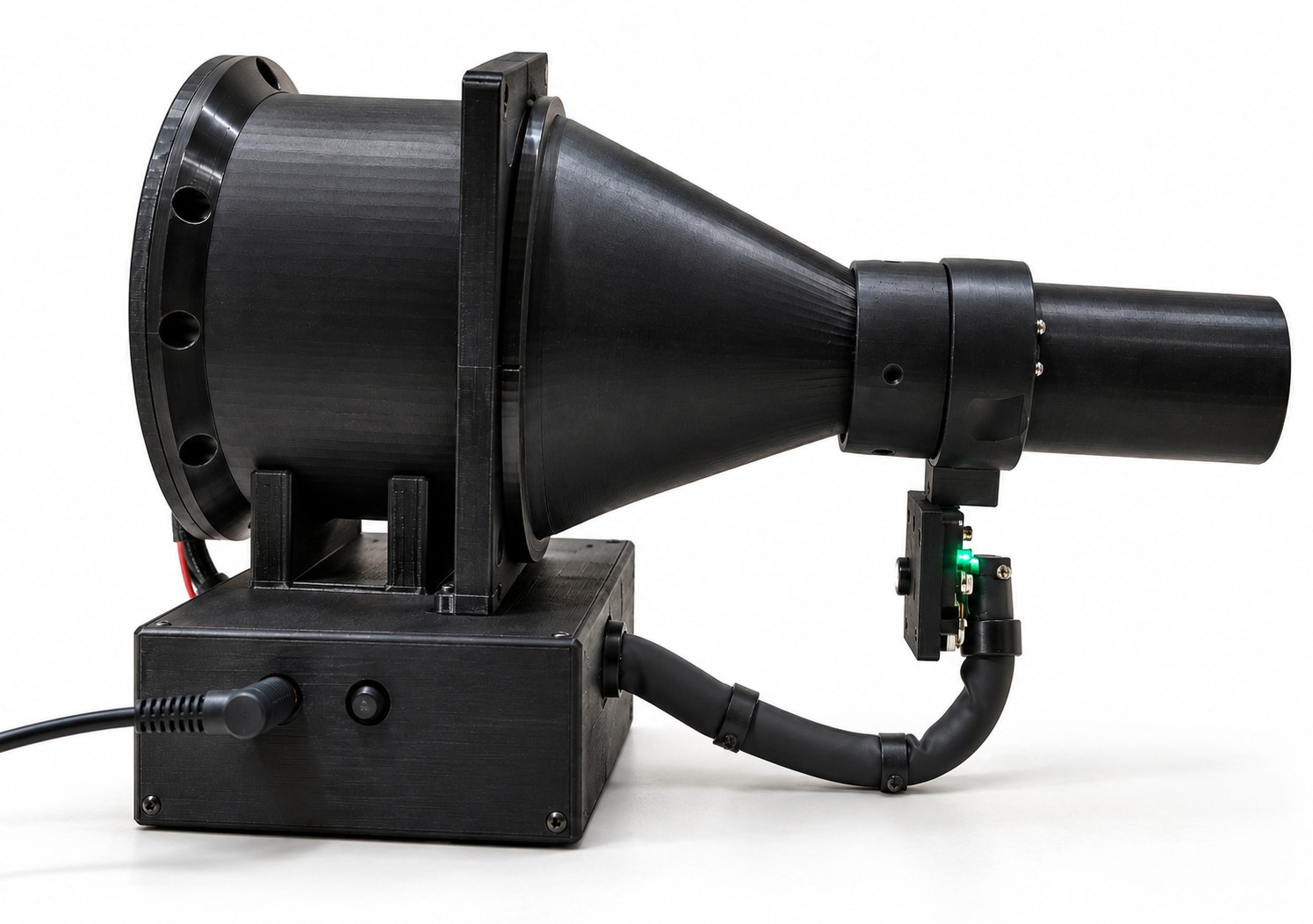
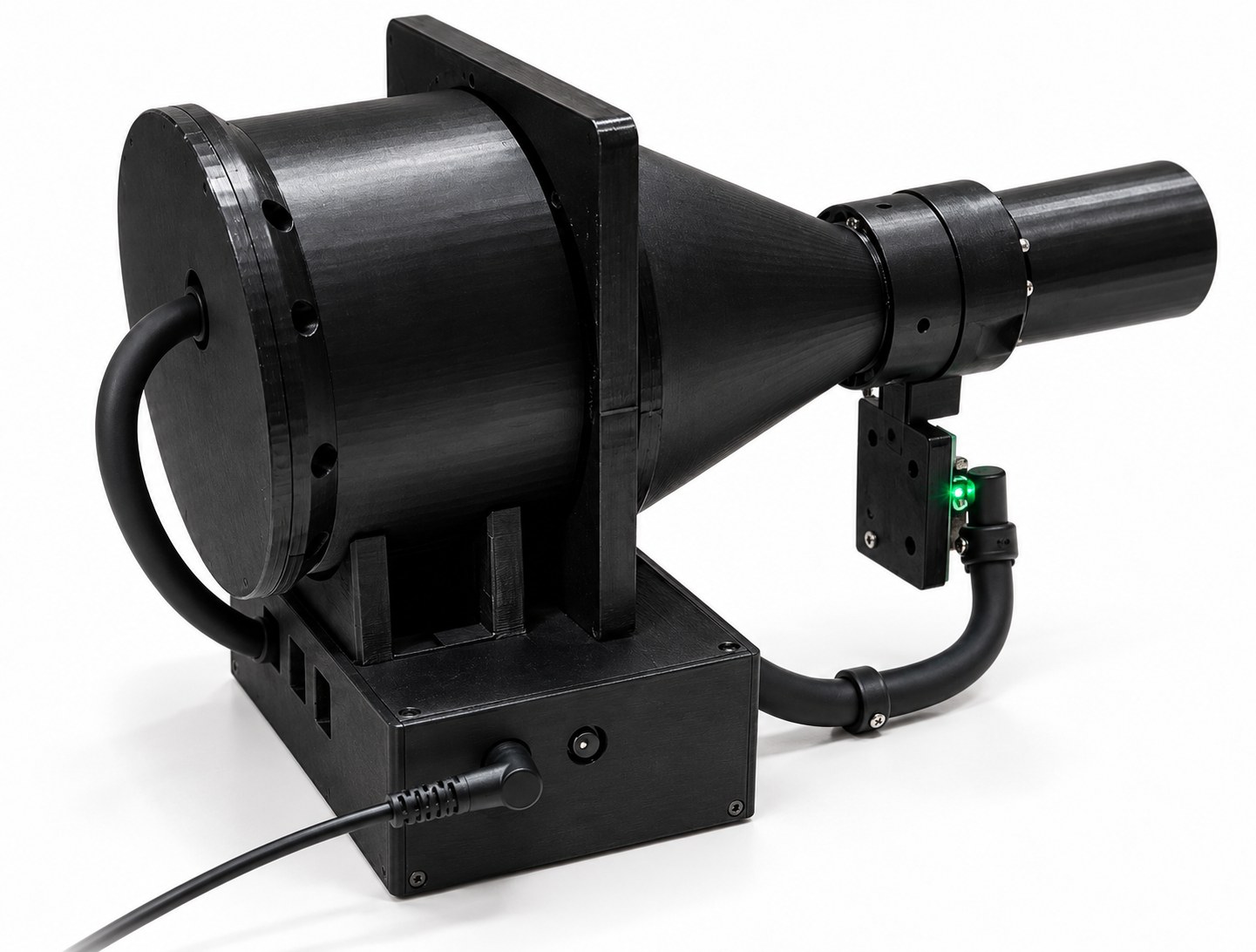
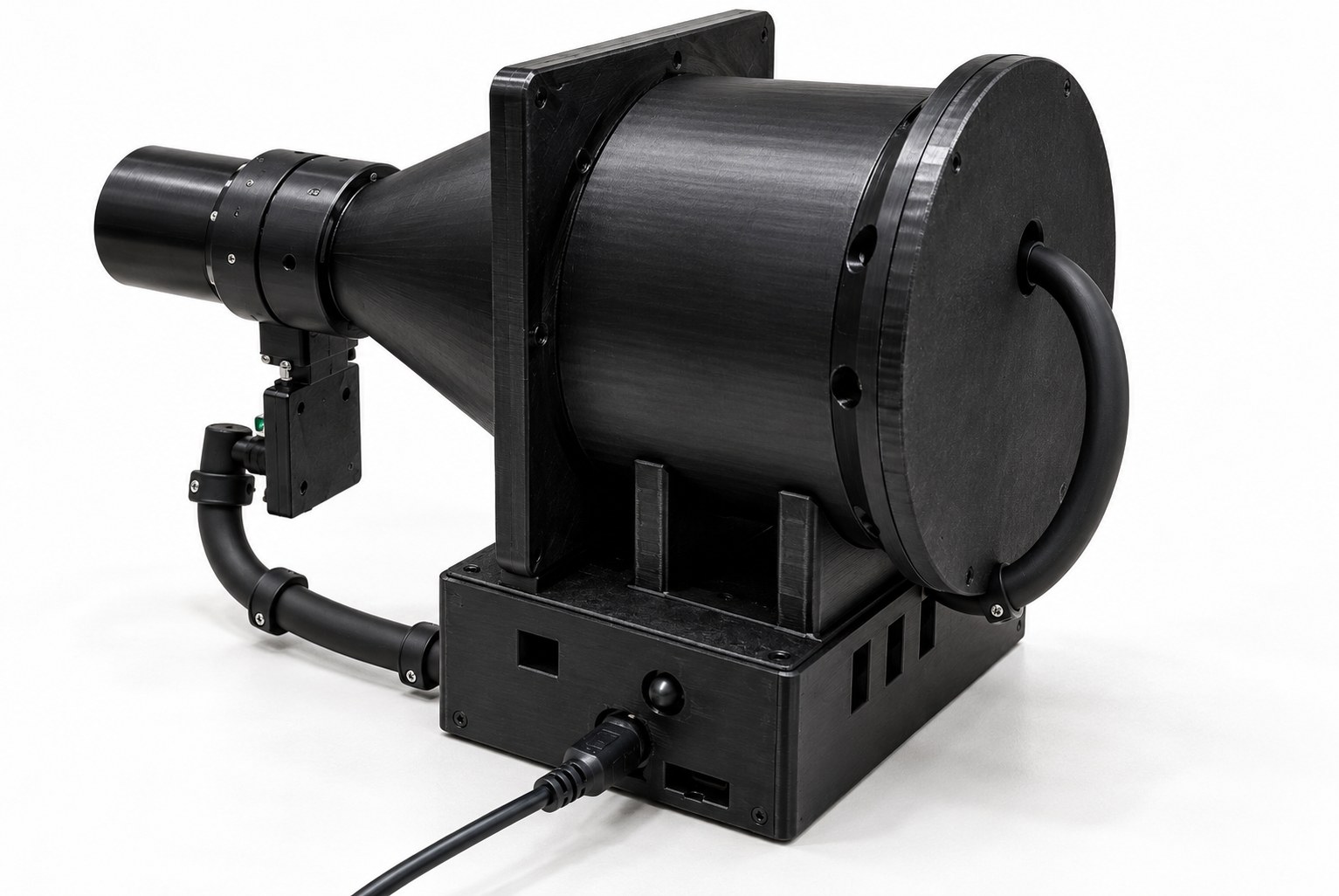
It needs no one to operate it, only electricity. It keeps watch, sounds the alarm with its own pulse and puts the fire out, with no water, foam or powder and nothing to refill. That makes it suited to rooms that are often empty or hard to reach: server rooms, labs, kitchens, and even spacecraft.
What's Next
From a match to a room
This prototype handles small fires at close range. The next steps are testing range and fire size, trying lower frequencies and larger drivers, adding a dedicated warning light and alert, and giving the nozzle a way to turn and aim at a fire the sensors find.
The biggest lesson was to test the riskiest part first. Before any sensor or enclosure, I checked the speaker could move enough air to matter, because everything else depended on it.