Case Study 01 · Wearable / Health Tech

iMotionS
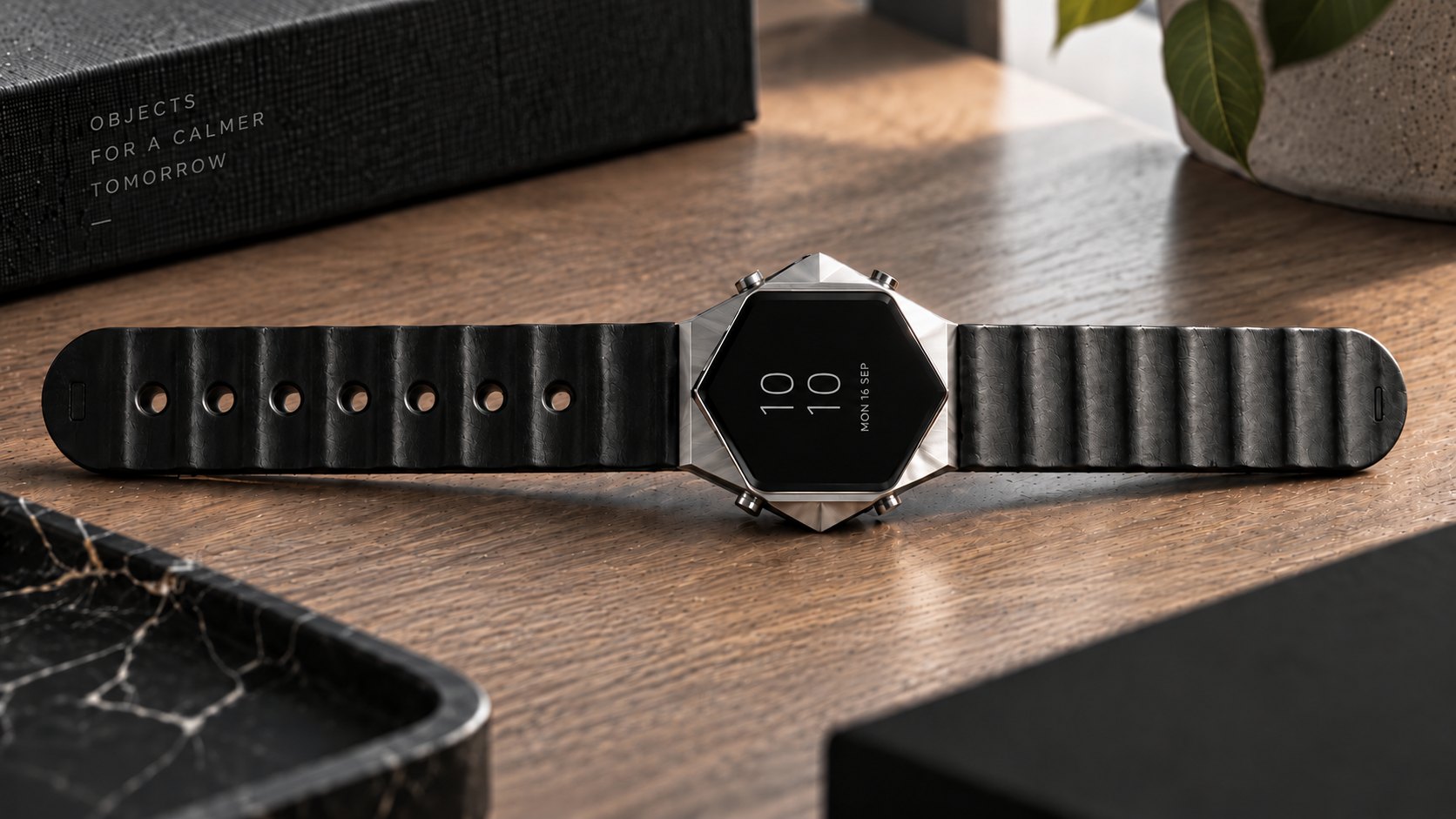
Motion sickness, treated without a single pill. A watch that senses discomfort early and answers with gentle, adjustable pressure on the inner wrist.
- Role
- Industrial design, mechanism, UI/UX
- Tools
- SolidWorks, Figma
- Category
- Wearable / Health Tech
- Output
- CAD, mechanism, app UI, film
The Problem
Two bands, two compromises
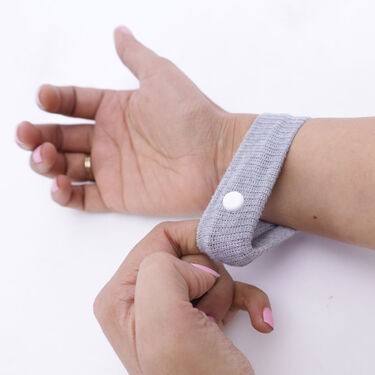
Two drug-free wristbands dominate the market. Acupressure bands press a plastic stud into the inner wrist. They are cheap, but the pressure never changes, they slip off the point, and they cannot tell when you need them.
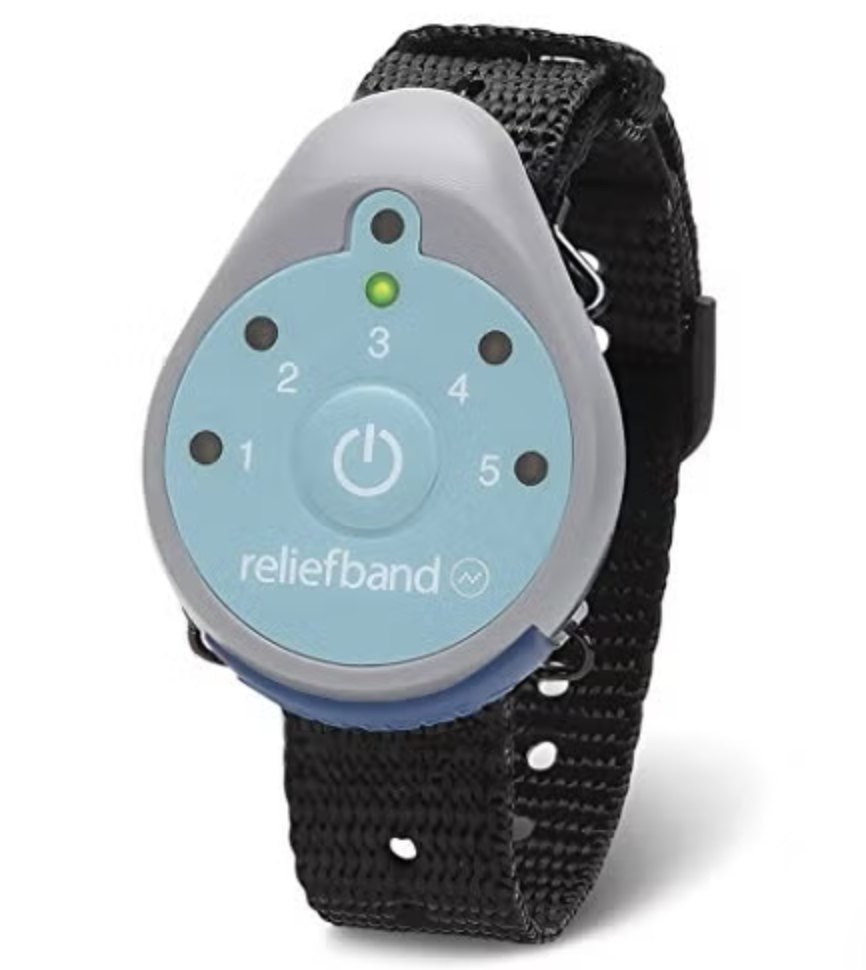
Nerve-stimulation bands let you choose an intensity, but they look and feel like hospital equipment, and nobody wants that on their wrist on a day out.
The gap
A wearable that adjusts itself, finds the right point, and is something people are proud to wear.
Form Exploration
Cut like a gem, worn like a watch
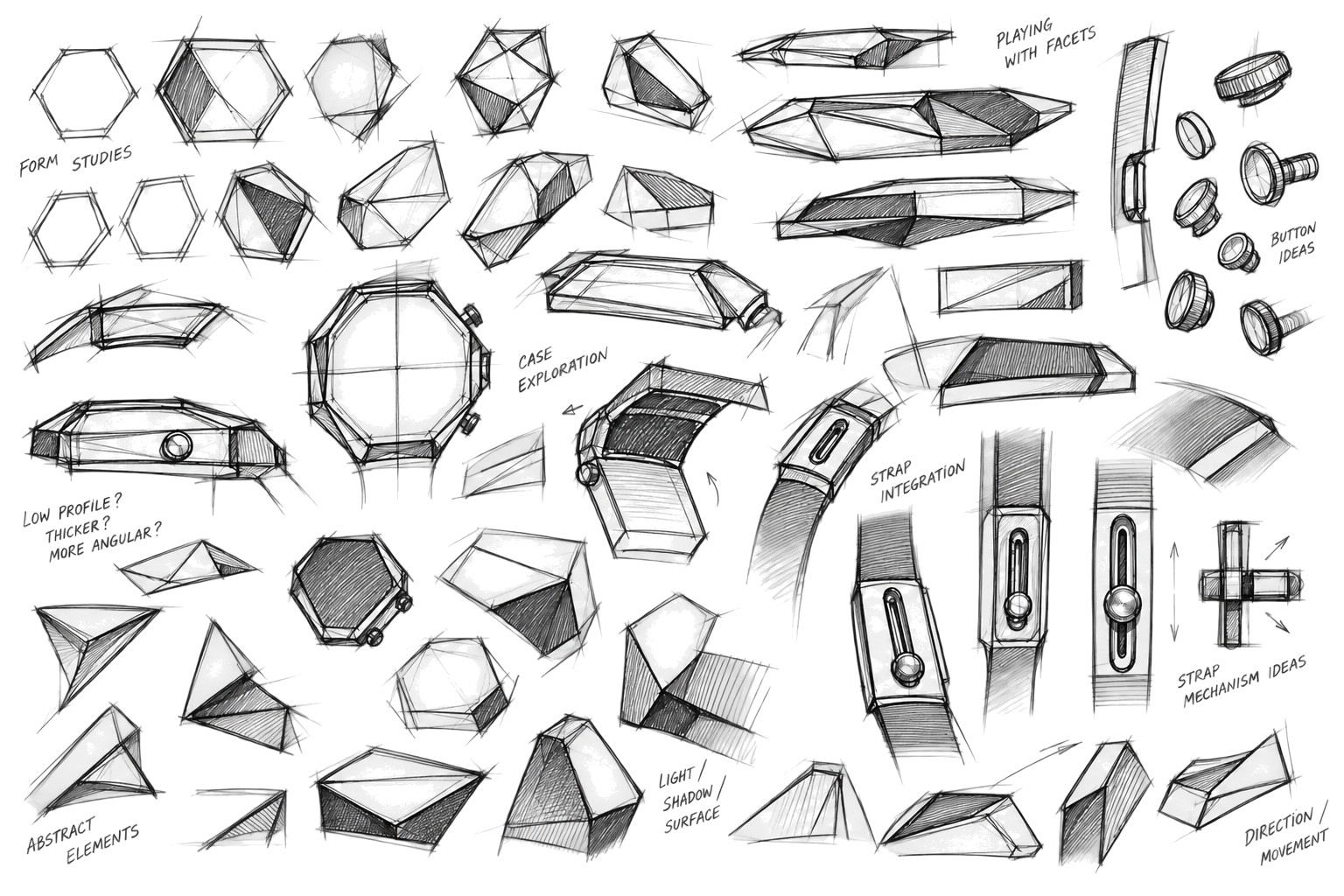
A medical device should not look like one. Sketching began with cut facets and moved through hexagonal and octagonal cases, low and chunky profiles, button details, and ways to hide a mechanism inside the strap.
Identity
Motion sickness is the feeling of your body and your senses pulling in different directions. In the logo, the M and the S lock together into a single shape: two forces that stop fighting and find their balance. Its hard, cut edges echo the faceted case, a reminder that calm can still be strong.
Mechanism
A small press, exactly where it counts
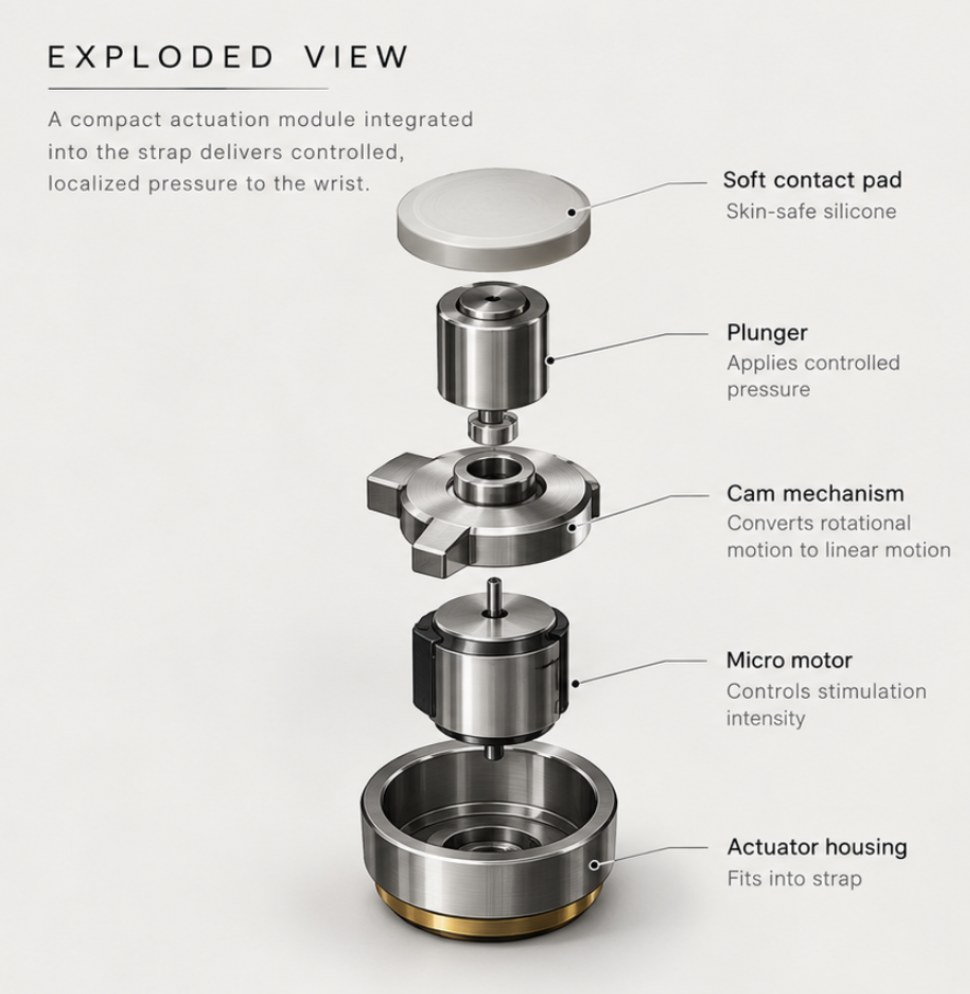
The therapy lives in the strap, not the case. A compact actuation module turns the motor’s rotation into a gentle, controlled press on the inner wrist.
- 01Soft contact padSkin-safe silicone, the only part that touches the wrist.
- 02PlungerApplies the controlled pressure.
- 03Cam mechanismConverts rotation into linear motion.
- 04Micro motorSets the stimulation intensity.
- 05Actuator housingFits into the strap.
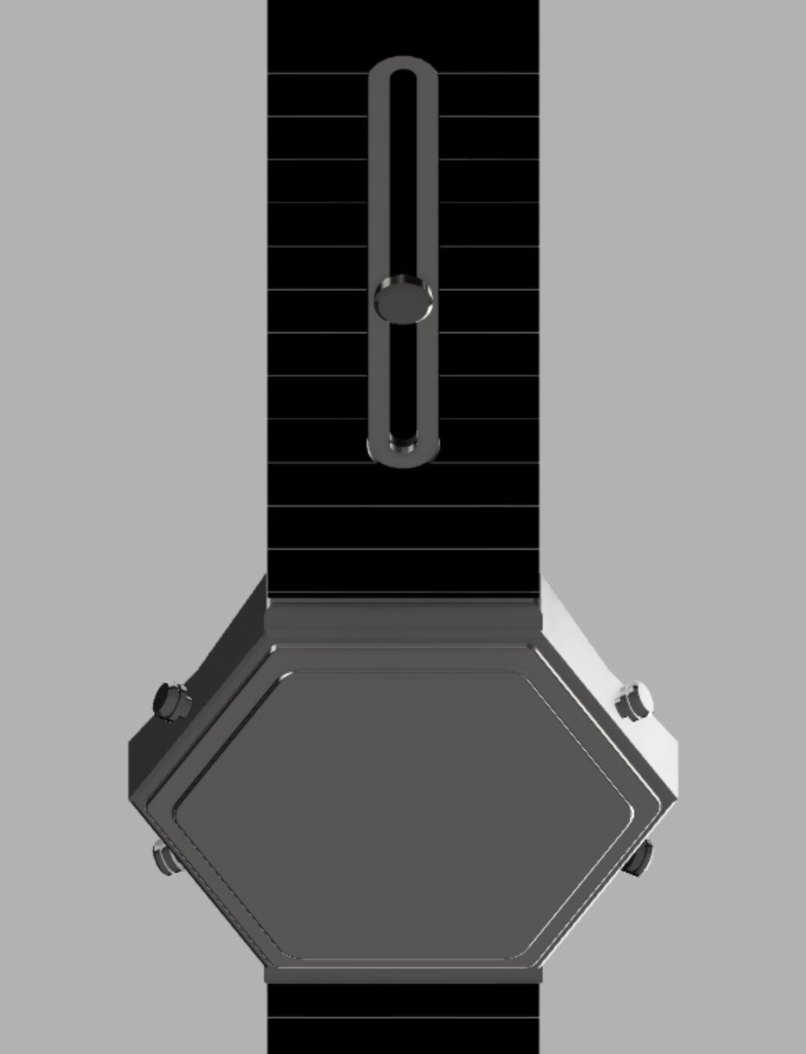
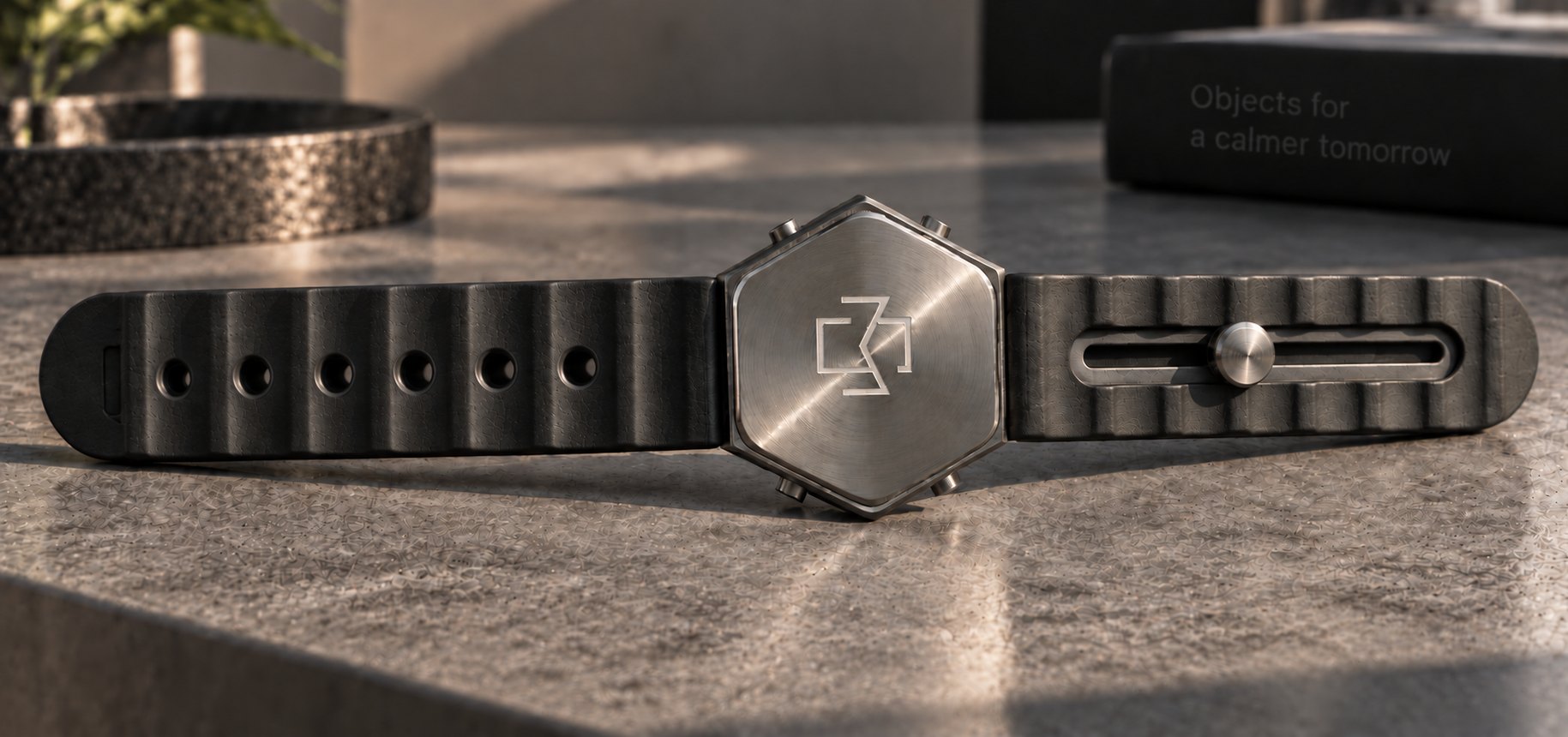
The actuator slides along a slot in the strap, so every wearer can set it on their own pressure point.
CAD
Every facet, measured
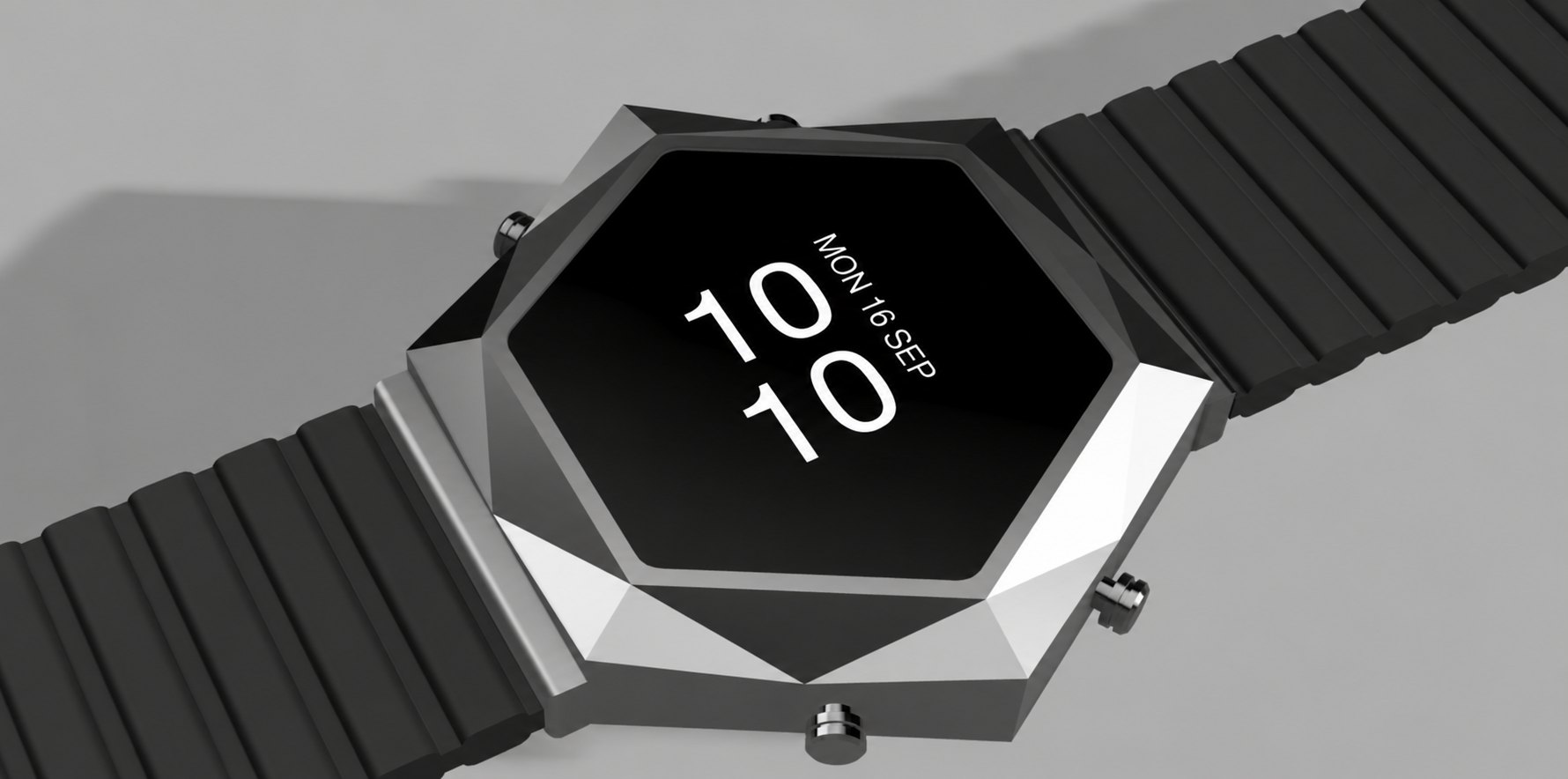
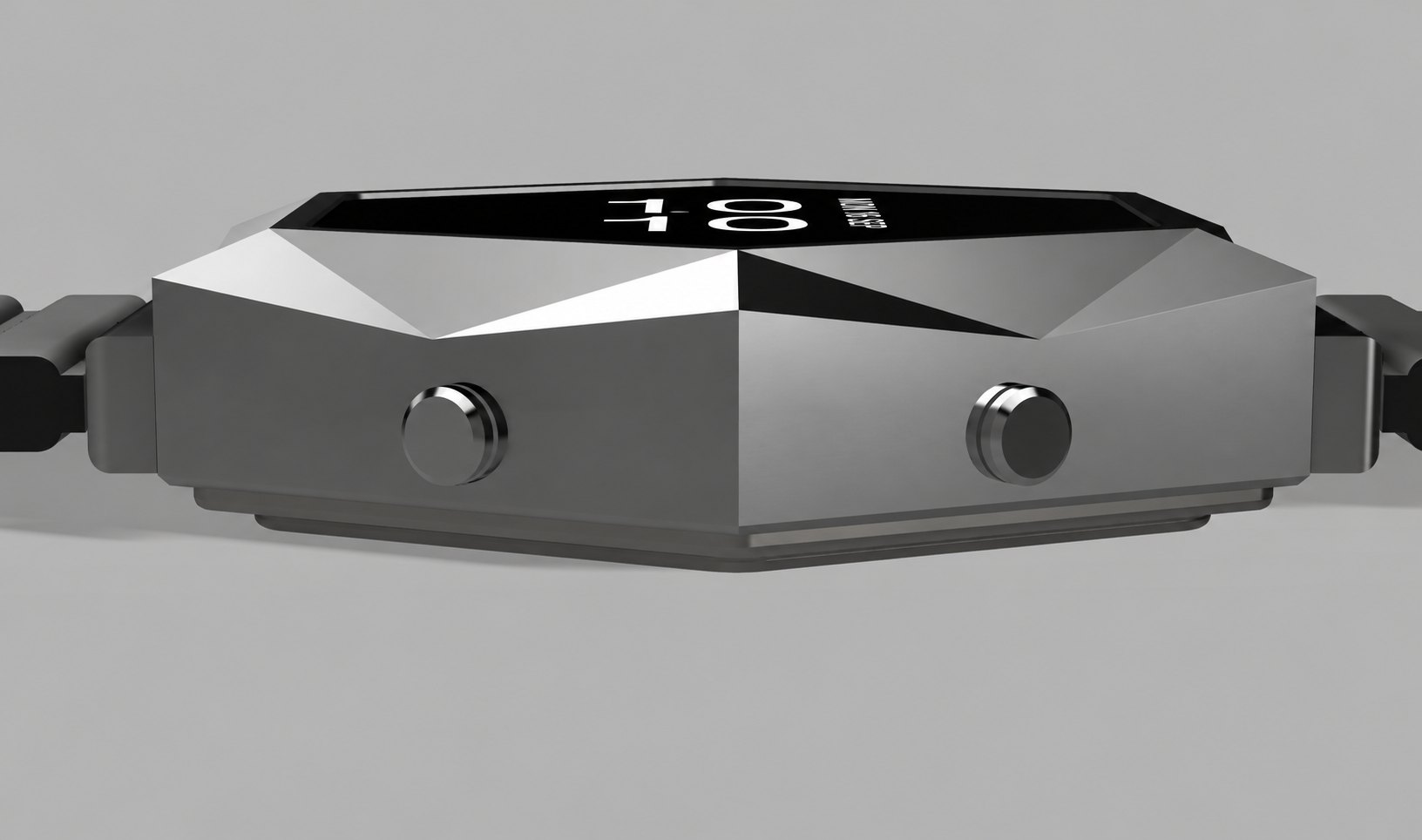
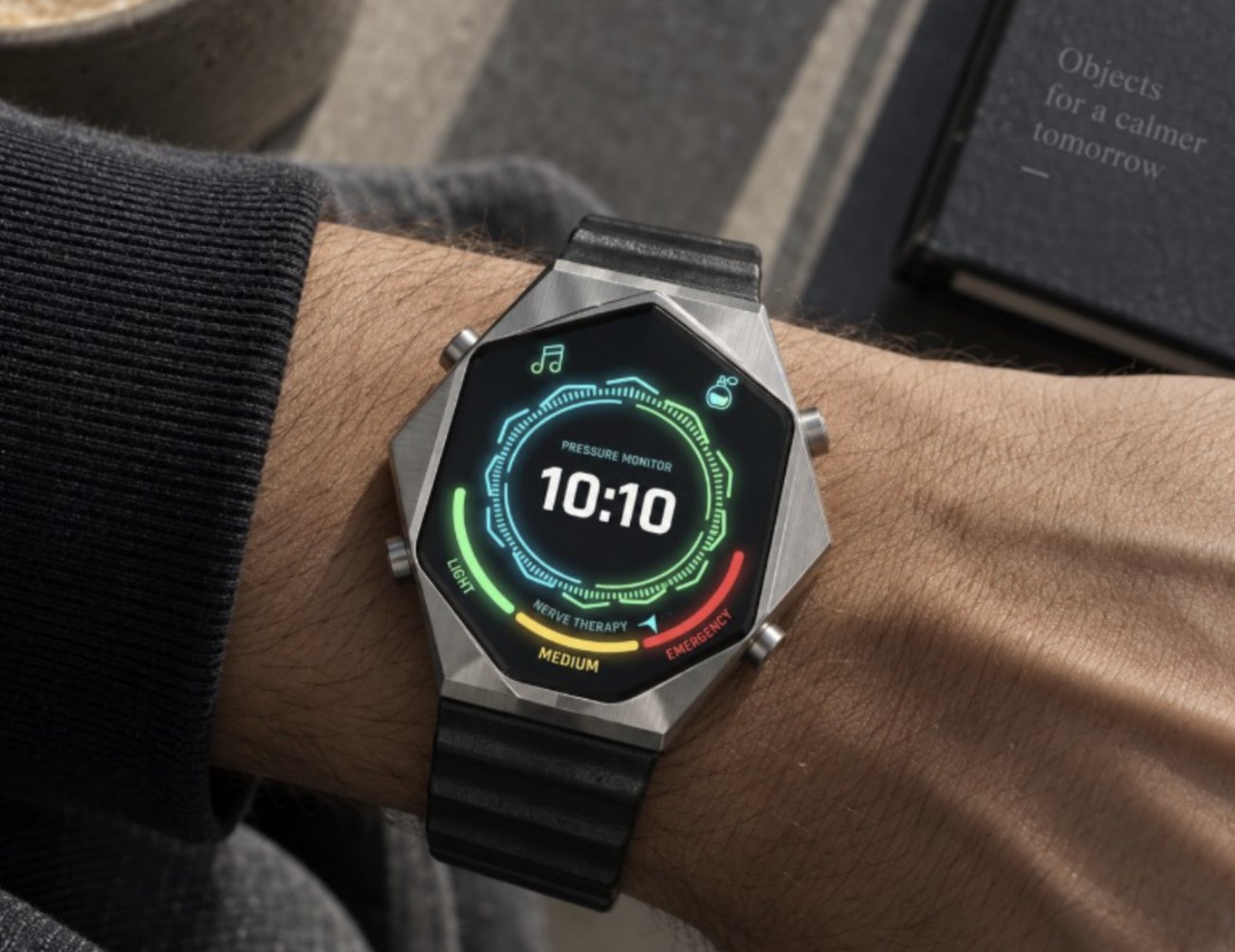
A hexagonal display sits inside a faceted bezel. The case stays low so it lies flat on the wrist, and four side buttons let you control it without looking.
Interface
Designed for the worst ten minutes of your journey
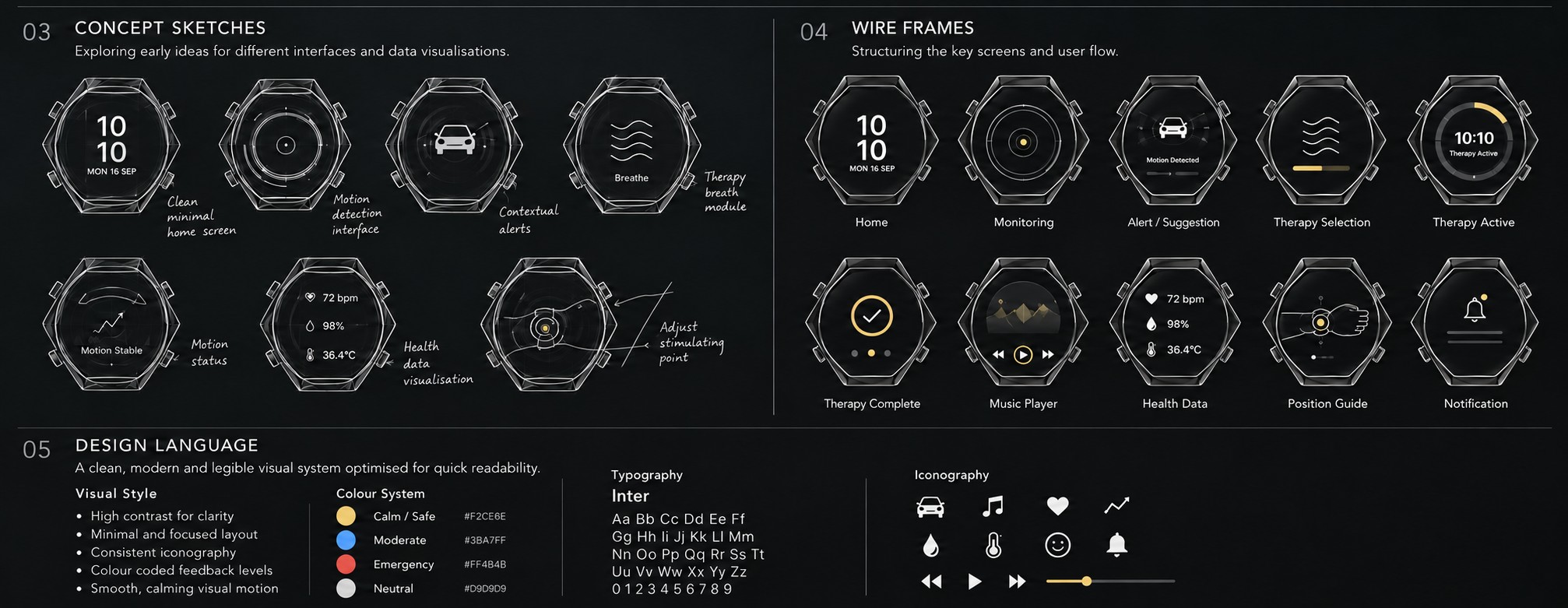
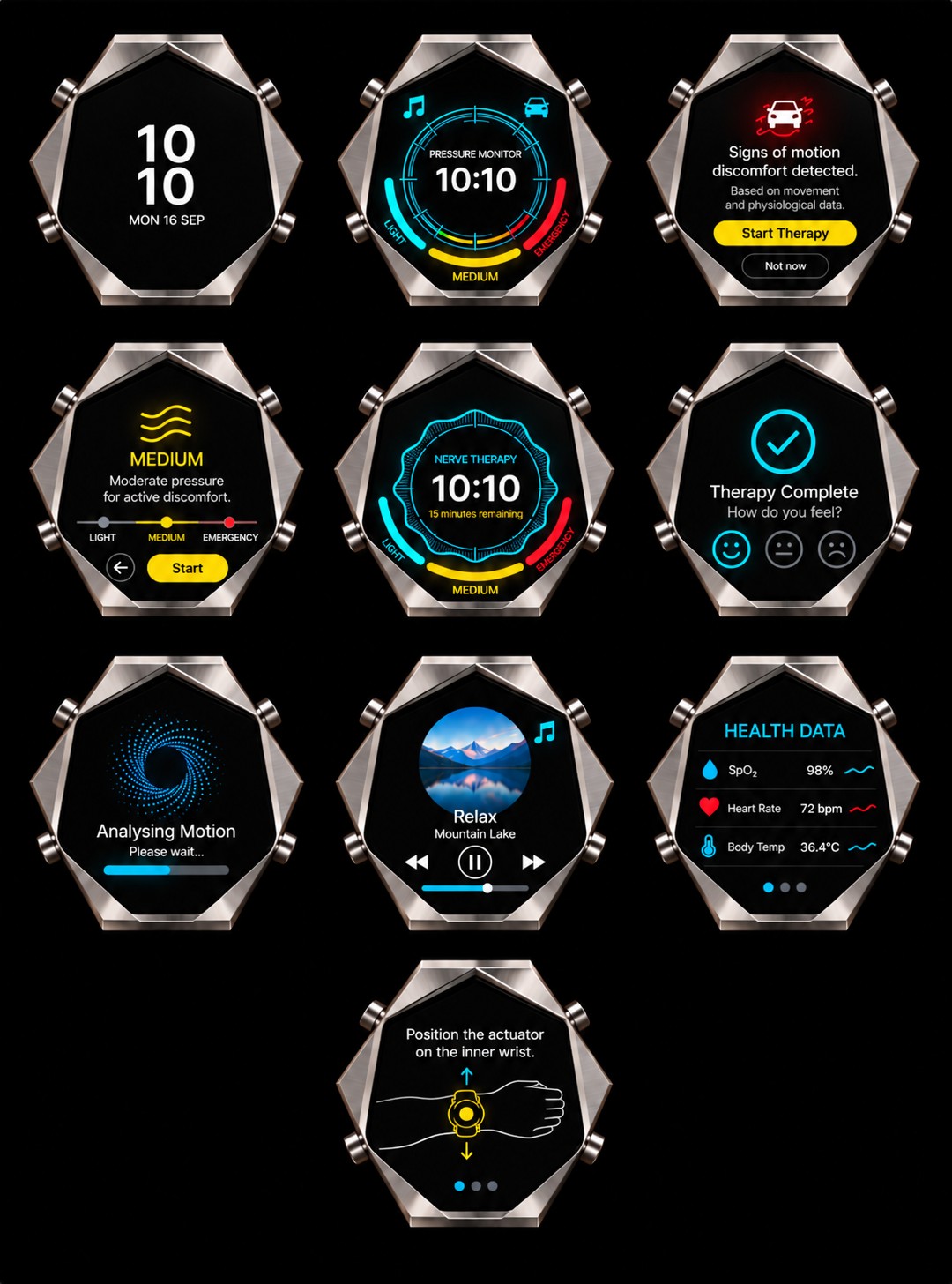
When you feel sick, the last thing you want is a menu. Every session follows the same four steps.
- 01DetectMovement and physiological data flag early signs of discomfort.
- 02ChooseLight, medium or emergency intensity, colour-coded so it reads at a glance.
- 03TreatA live ring shows the therapy running.
- 04Check in"How do you feel?" after every session.
Around them sit calming music, health data (heart rate, SpO₂ and body temperature) and a guide for positioning the actuator.
Final Design
Form follows life
What's Next
From render to wrist
The next step is a working prototype of the actuator: testing pressure levels with real users, and seeing how accurately people can place the pad using the on-screen guide.
The biggest lesson: a health product only works if people choose to wear it. Treating the therapy and the watch as one object, rather than a medical band with a screen bolted on, shaped every decision.